Miguel Stilwell d’Andrade. The long-serving EDP executive leaves the electricity company on the road to recovery
The CEO of EDP leaves behind an electricity company which, despite major setbacks in its results and share price, has managed to get back on its feet over the last two years.
Miguel Stilwell d’Andrade is set to step down as head of EDP and EDP Renováveis at the end of his current term of office, which ends next year. He leaves behind a legacy of record profits, but also of major setbacks in the markets – that he has not yet managed to fully reverse.
The decision to step down was confirmed by the company in a statement, after ECO had broken the news. “I have spent 25 years at EDP, 15 of them on the executive board. It is the right time to leave EDP, to bring a cycle to a close”, the executive explained in an exclusive interview with ECO. His term of office ends at the end of this year, but the company’s general meeting of shareholders to elect the new governing bodies is not due to take place until April or May 2027.
Stilwell d’Andrade has been the group’s CEO since January 2021, having succeeded António Mexia after serving as his CFO and having built up a long career at the company, which began in 2000. In the year of his appointment, he took the reins of both EDP and its clean energy subsidiary, succeeding Mexia and the then head of EDP Renováveis, João Manso Neto, after they had stepped down due to suspicions that they were under investigation in connection with the EDP case.
He is satisfied with the “work” he has left behind at the electricity company and believes he has laid solid foundations to underpin its future. “EDP has a strategic plan; it is on the right track; I am leaving behind a strengthened balance sheet”, he explains.
A legacy of record profits
EDP’s performance in 2026 began to look poor compared with the previous year as early as the first quarter. The ‘headwind’ came from the series of storms that battered Portugal in January, causing damage to the electricity networks managed by E-Redes, part of the EDP group. Another side effect of the bad weather was that electricity selling prices ‘fell’, causing generation profits to dwindle.
The following three months saw a recovery, albeit a modest one. The net profit for the first six months was 3 per cent higher than in the previous half-year. Results for the first nine months of the year are being released this week, with EDP Renováveis having already reported its figures: profits quadrupled compared with the same period last year.
After a somewhat turbulent start, 2026 appears to be on a better track to meet the targets reiterated by Stilwell last May. The CEO says that EDP’s net profit is set to reach 1.3 billion euros, slightly higher than in 2025, which was a record-breaking year for the company. The driving force behind this was EDP Renováveis, which returned to profitability after a massive slump in 2024.
The year 2024 stands out for all the wrong reasons: it was a difficult year for the group after its clean energy subsidiary reported a loss of 556 million euros. The financial results were weighed down by impairment charges relating to wind projects in Colombia, which failed to get off the ground, and in the United States, due to the current uncertainty surrounding offshore projects.
Renewables and the United States: the prodigal sons
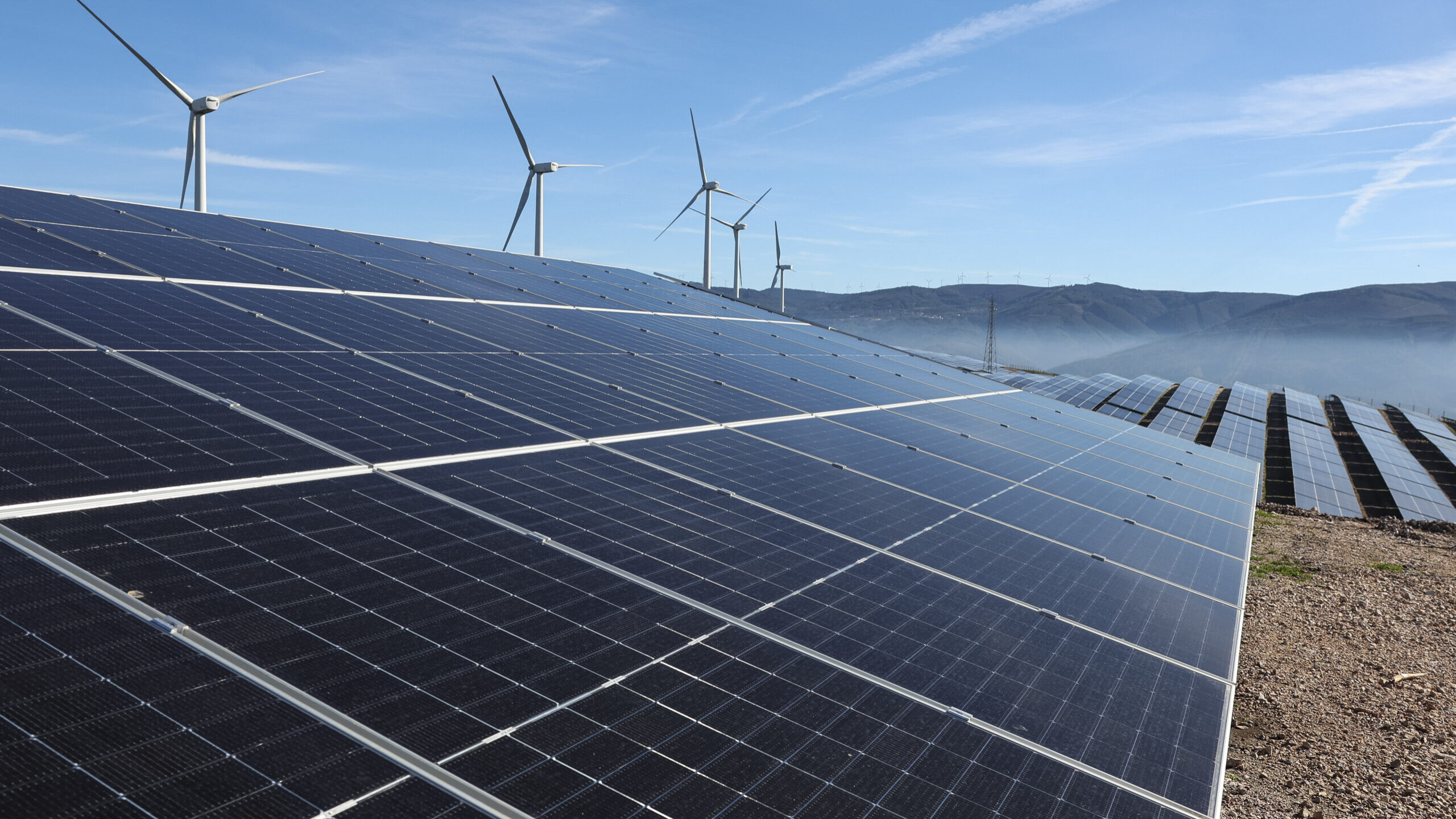
Stilwell d’Andrade witnessed the birth of EDP’s renewables business, having overseen the initial public offering of the clean energy subsidiary in 2007 in his role as Head of Corporate Development and M&A. And this technology has remained the group’s ‘star’ throughout his tenure, contributing almost 70 per cent of the electricity company’s EBITDA in 2025.
At the presentation of its strategic plan up to 2028, which took place in London in November last year, EDP was clear about the key ‘targets’ that will underpin its growth in the coming years. Geographically, the United States stands out as the region to which it intends to direct 60 per cent of the total investment planned for these two years, amounting to 12 billion euros.
But Stilwell’s tenure saw many other significant events. It began in 2021 with a world still in the grip of the Covid-19 pandemic, creating a challenging economic climate. The following year was marked by the closure of the Sines coal-fired power station. 2022 was a year of renewal and expansion: EDP abandoned its old red logo in favour of blue, green and purple. It also ventured into new renewable technologies, this time offshore wind, in partnership with Engie under the Ocean Winds banner.
It also expanded beyond national borders, finalising a deal to acquire Singapore-based Sunseap, through which the electricity company entered the Asian market in the solar sector. And, in July, it entered the German and Dutch markets with the acquisition of Kronos Solar. In 2023, a takeover bid was launched for the Brazilian subsidiary, which subsequently became wholly owned by EDP.
On the markets, Stilwell “stayed put”
EDP closed the session on 4 November at €4.98. 2026 has been a positive year, with a 27% rise so far, slightly higher than the 26% jump the share price recorded the previous year.
However, these were the only two positive years for EDP on the markets out of the five that have so far made up Stilwell’s tenure. Between 2021 and 2023, the falls were more modest, ranging from 2% to 6%, but 2024 was a year of disaster: the share price fell by 32%.
The current price of 4.98 euros is therefore close to – and still below – the 5.15 euros the share was worth at the end of 2020, before Miguel Stilwell d’Andrade took office. The truth is that EDP was not an isolated case: companies in the renewable energy sector shared a downward trend that began in 2021 and only started to reverse in 2025.
One of the factors of uncertainty hampering the performance of these shares was the energy policy of Donald Trump’s administration, which is vocally opposed to renewable technology and even went so far as to reverse some of the incentives introduced by former President Joe Biden. Last Tuesday, the ‘blue wave’ that swept through US politics in the mid-term elections may help EDP get back on its feet.
Originally published at Eco.pt