After storms, farmers fear losing customers as imports secure prices
Large retailers want to "try to help domestic producers recover from this dramatic situation". Association says "what is happening in the fruit and vegetable and agricultural sectors is devastating".
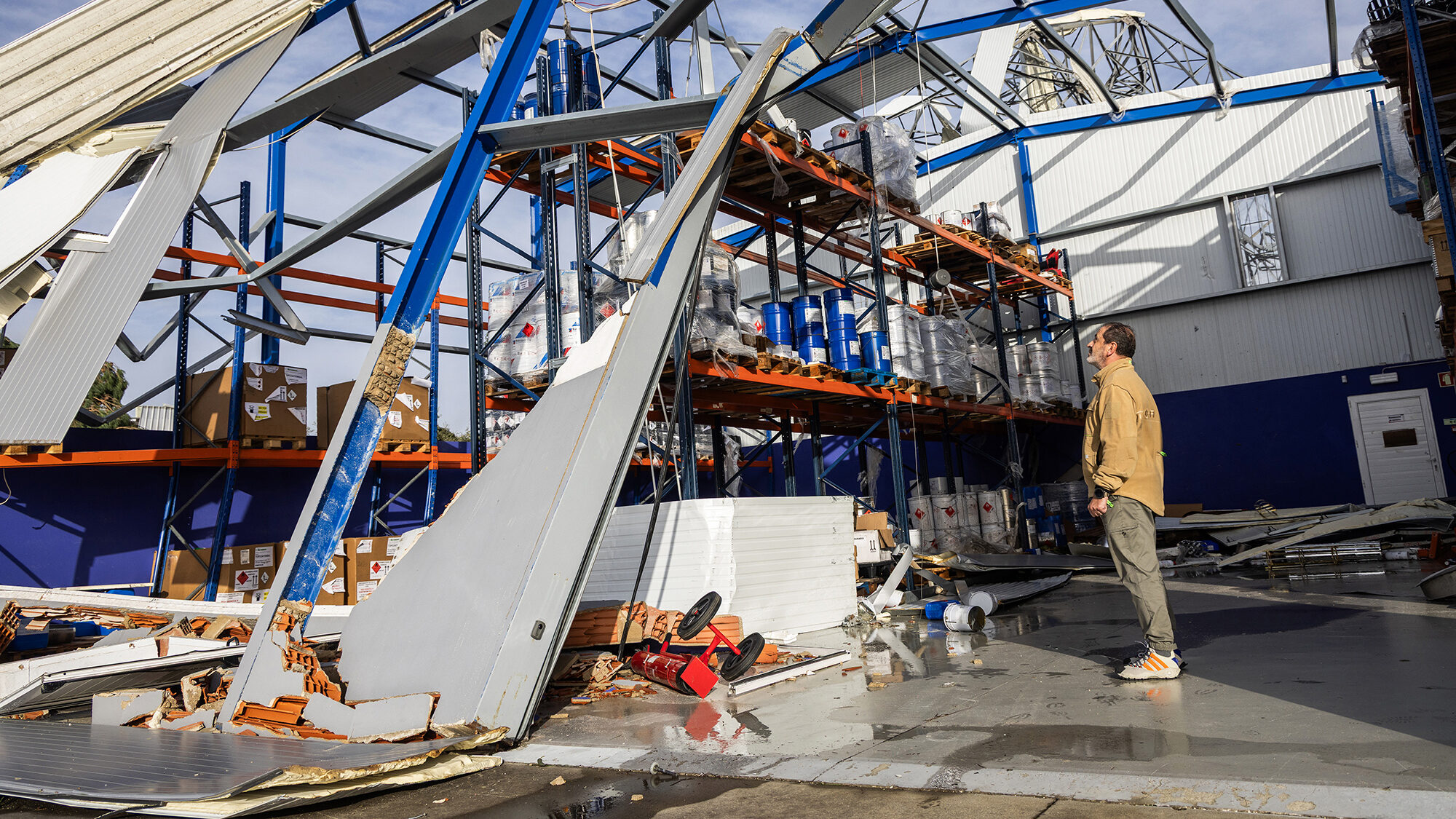
On farms, the damage caused by the series of storms that have ravaged the country since the end of January exceeds €700 million, and with the bad weather showing no sign of easing, farmers are left to count their losses and try to save what they can. With crops destroyed, animals killed and greenhouses damaged, their concern is also not to lose customers, who will necessarily have to find new suppliers until production is restored.
For consumers, the effects of the storm on food prices should not be felt because supermarkets will increase import levels to cope with the stoppage of their national suppliers. “In winter, crops go dormant, with the exception of greenhouse vegetables, but many are grown for export. Supermarkets will have to source food from other parts of the country that have not been affected or from Spain”, Luís Mira, secretary-general of the Confederation of Portuguese Farmers (CAP), explains to ECO.
“The way things are organised, there will be no shortage of food on the market”, confirms Paulo Santos, from the National Agriculture Confederation (CNA). “If we don’t produce, we import more”, he adds, stressing that the consequence will be “to aggravate the brutal deficit in agri-food”. Spain will be the most obvious market, because Portugal is already a customer and we are talking about perishable products, which means a shorter supply chain, he points out to ECO.
And the fact that they are perishable products avoids the temptation to hoard, which could inflate prices. “In a situation of market nervousness, instead of buying the normal amount, people buy double or triple, which increases price pressure. In this case, that doesn’t happen”, points out Luís Mira, recalling what happened with products such as toilet paper during the Covid-19 pandemic.
The CNA hopes that large retailers will not take advantage of the situation to raise prices. “80% of the price of food goes beyond the farmer. For every hundred euros a consumer pays, only 20 euros stay with the producer, and even when production costs go up, such as energy or pesticides, this is often not reflected in the final price, because it is the large retailers who set the price”, explains Paulo Santos.
“With thousands of greenhouses destroyed and fields flooded with vegetables that were ready to be harvested, I hope this does not serve as an excuse for speculation”, he stresses.
The director-general of the Portuguese Association of Distribution Companies (APED) assures ECO that the spirit of large-scale distribution is precisely the opposite: “To try to help national producers recover from this dramatic situation”.
“What is happening in terms of fruit and vegetables and agriculture is devastating”, acknowledges Gonçalo Lobo Xavier, giving an example of how this aid is reaching the ground. “With dozens of farms faced with the need to send their animals to slaughter because they had no water or food to give them, the Ministry of Economy asked for increased purchases of pork and beef. Without abandoning our usual suppliers, it tried to make this effort”, he says.
Without committing to any price trend – because there are many products under pressure for various reasons, such as eggs, chicken or beef, or even cocoa – Gonçalo Lobo Xavier gives an example of how the calamity that has befallen Portugal is not having an impact on prices.
“With the fish markets closed due to bad weather, there is no fresh national fish on the stalls. Fresh fish has been imported from North Africa or farmed fish has been used, without influencing the price because these were already sources of supply for these products”, he explains, making a point of emphasising that “the price of fish has been inflated for many months”.
The APED leader also stresses that there is “great concern about remaining loyal to suppliers and retaining them”, thus responding to farmers’ concerns that large retailers may be tempted to stick with companies that they will use in the short term to meet immediate needs.
“Farmers who have lost their greenhouses will still take four to five months to resume production”, stresses Luís Mira. “Many productive areas have been devastated, which will have an impact on rice production and delays in corn production”, adds Paulo Santos.
Without committing to any price trend – because there are many products under pressure for various reasons, such as eggs, chicken or beef, or even cocoa – Gonçalo Lobo Xavier gives an example of how the calamity that has befallen Portugal is not having an impact on prices.
“With the fish markets closed due to bad weather, there is no fresh national fish on the stalls. Fresh fish has been imported from North Africa or farmed fish has been used, without influencing the price because these were already sources of supply for these products”, he explains, making a point of emphasising that “the price of fish has been inflated for many months”.
The APED leader also stresses that there is “great concern about remaining loyal to suppliers and retaining them”, thus responding to farmers’ concerns that large retailers may be tempted to stick with companies that they will use in the short term to meet immediate needs.
“Farmers who have lost their greenhouses will still take four to five months to resume production”, stresses Luís Mira. “Many productive areas have been devastated, which will have an impact on rice production and delays in corn production”, adds Paulo Santos.
“With losses exceeding 700 million, in an initial assessment of the impact of the Kristin depression, rapid assistance is needed to establish productive potential”, says the official, making an appeal: “Those who can, choose domestic products, because that helps a lot.”
Declaration of losses instead of application
In terms of aid, the CNA has asked the Ministry of Agriculture for clarification, because when trying to fill in the form for the simplified measure for losses caused in the sector by the Kristin depression and subsequent climatic phenomena, farmers are informed that the “procedure does not correspond to an application”, but is only a declaration of losses.
“Farmers are facing a dramatic situation on the ground, with farms and crops destroyed, huge losses, future incomes compromised and persistent adverse weather conditions that raise fears of further damage. The last thing they need right now is a lack of clarity in the information and delays in the payment of the support to which they are entitled”, the CNA writes in a statement.
In the same request for clarification, the organisation asked what the total budget available for this measure was and whether the damage caused to the forest was eligible, given that the forest had been severely affected. According to the government’s announcement, 100% support is available, up to a maximum of ten thousand euros.
CAP Secretary-General Luís Mira explains that “the Executive will first have to calculate the damage in order to calibrate the measure on that basis”. But asking people to make this assessment without parameterising the damage may not be the best option, he warns.