Companies in the eye of the storm are holding on to contracts, but fear for future orders
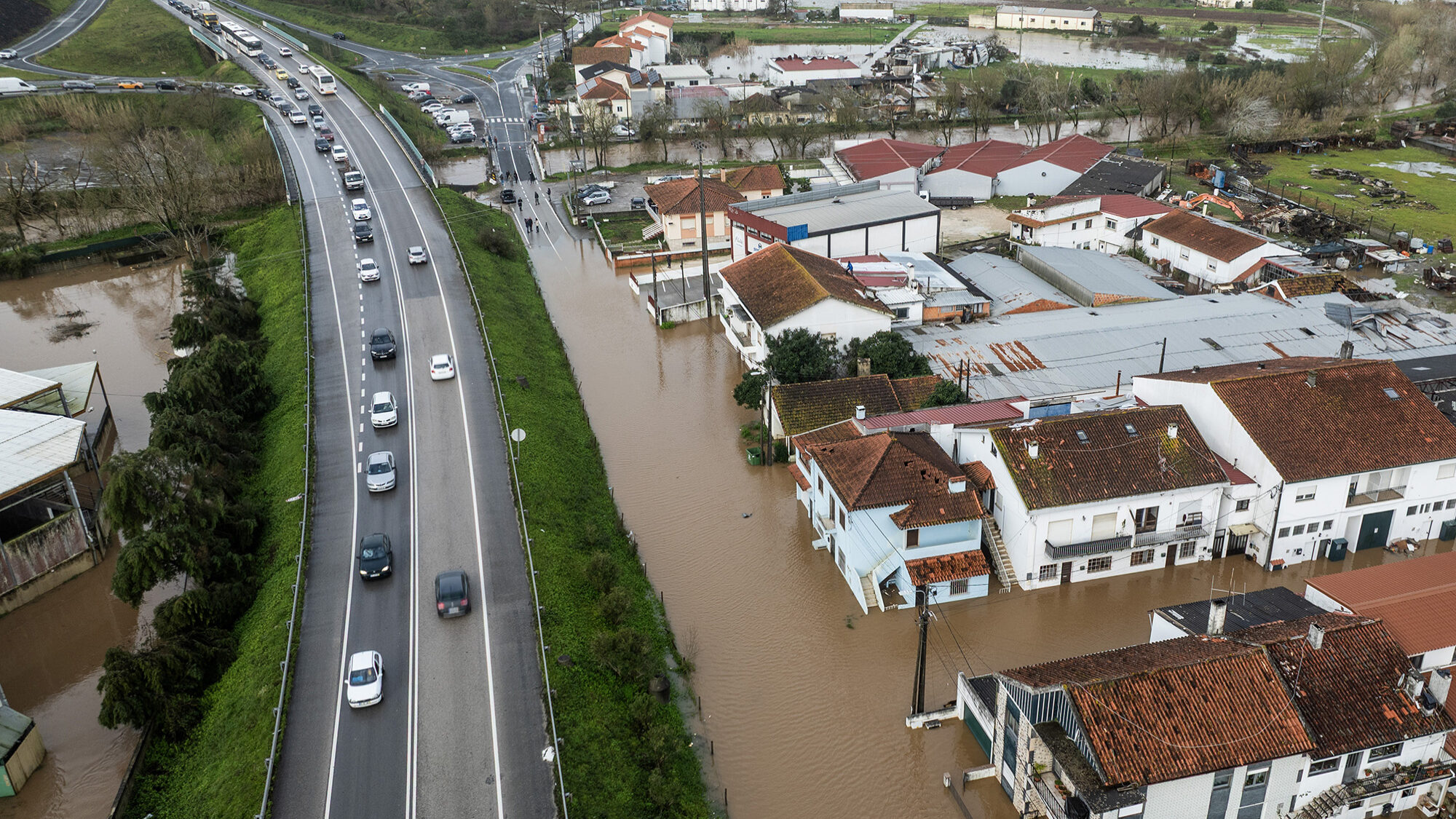
Companies affected by the storms have been trying to meet demand by using generators and assistance from other factories, but fear difficulties in securing new orders.
Since storm Kristin swept across Portugal, João Faustino, owner of JF Moldes, has been spending his days between his five factories. With two units “beyond repair”, the businessman from Marinha Grande, in the district of Leiria, divides his time between the buildings owned by his group, which supplies large companies such as Porsche in Germany. Producing at less than 30% of his capacity, using generators, this businessman fears that no new orders will come in. This concern is shared by other companies, which fear for the future.
The JF Moldes group was one of the hardest hit by the storm that swept through the central region of the country. Of its five units, none escaped without damage, with two being completely destroyed. “Those are gone”, laments João Faustino, speaking to ECO.
Regarding the other three, the businessman, who is also president of the National Association of the Mould Industry (Cefamol), says that there has been damage, particularly to roofs. “We are patching things up, making repairs”. All in all, we are talking about millions in damages, still to be calculated.
Without electricity, internet, or water, João Faustino is making every effort to continue production, using generators, a Starlink antenna he bought in Spain, and water from the well. “We are producing 30% or less in the three factories”, he estimates. Despite all these limitations, the company managed to ‘resolve’ the situation with Porsche, which was waiting for a delivery from the company to continue producing a car in Germany.
“The situation with Porsche has been resolved. The Porsche men came on Monday [to see the factory] and on Wednesday we sent the moulds”, he says, ensuring that the company maintains its contract with the German company. As for other customers, he assures that he continues to “comply”, but that they also “understand” the scale of the tragedy.
According to the owner of JF Moldes, “in terms of parts production, [the company] is meeting customer needs. It is assured with companies in the region”, which it is turning to for services it cannot provide at this time.
The problem is the future. “We hope that they will have new orders for us later”, he emphasises, explaining that “many customers are currently postponing the launch of new products due to geopolitical issues, and that is a problem”.
ECO knows that, like JF Moldes, other companies affected by the storm will not be receiving new orders and fear that they will not arrive.
Manuel Oliveira, secretary-general of Cefamol, is not currently aware of any companies losing contracts, but warns that it is necessary to maintain contact with customers to ensure new orders.
“The biggest difficulties are winning new customers and seeking new orders”, he says, adding that the situation “affects normal activity” in the sector, which supplies major car manufacturers in Europe. “Companies cannot lose touch with the market”, he warns.
As for the current scenario in the sector, Manuel Oliveira notes that there is a “slow recovery”. “The situation remains difficult in terms of electricity and communications, with some companies working with generators, which is not ideal and has enormous costs.”
Despite this, the secretary-general of Cefamol indicates that companies are “making every effort” to respond to customer requests, with “collaboration between companies in the sector to complete operations and meet the needs of other companies”.
The automotive components sector is another that has been severely affected and is slowly resuming operations. “Companies are managing to start up again”, says José Couto, president of the Association of Manufacturers for the Automotive Industry (AFIA), noting that they are not working at 100% capacity, “but with solutions that allow them to partially fulfil orders”.
“We know that there are talks with customers in order to find a solution that is good for both parties”, he explains. As for the most affected units, where the losses are greatest, “there are companies that are still unable to produce”. Situations that, he admits, “will take longer to resolve”.
Damages yet to be calculated
Although he anticipates losses in the millions, the owner of the Marinha Grande mould company is still in the process of “assessing the damages to present to the insurance company”. For now, he says he does not yet know what he will do about the two “irrecoverable” units.
“Everything is being studied”. Reconstruction, he explains, would take months and lead to a slowdown in orders. “It could take two years to build, and in two years’ time there may be no orders”. With over a hundred employees, the businessman is currently distributing them across the three units that are still operating.
Major exporters concerned
With suppliers affected by the storm, Bosch, Autoeuropa, and Stellantis have managed to maintain production, with some companies resorting to available stocks to ensure deliveries. Greater constraints will depend on how long it takes for the affected companies to resume activity.
“So far, we have not seen any impact on production at Bosch’s factories in Portugal”, an official source from the German multinational told ECO, adding that “some of the suppliers located in the area affected by the storm are, for now, ensuring supplies through available stocks”.
Bosch states that “the possible existence of constraints will depend on the time needed for these suppliers to resume activity”. “We are monitoring the situation continuously, but at the moment, our factories are continuing to operate normally”, he stressed.
Autoeuropa explained that “the storms of recent weeks have affected some of its suppliers, leading to the temporary stoppage of some production shifts”.
The same source explained that “Volkswagen Autoeuropa is closely monitoring the situation and implementing measures to minimise the impact on production”, which is currently “running normally”.
The Stellantis factory in Mangualde is another of the giants in the automotive sector that also has suppliers in the region most affected by the successive storms. “We confirm that we have suppliers in the Leiria region. However, deliveries are proceeding as planned, with no impact on production at the Mangualde factory”, an official company source told ECO.