Portugal has not yet activated EU agricultural aid following the storms
“In order to make use of the option to grant payments to farmers in crisis situations, Portugal would have to submit a request to the Commission to amend the PEPAC.” Portugal has not yet done so.
The 27 Member States of the European Union (EU) can draw on funding from the strategic plans of the Common Agricultural Policy (CAP) to make payments in crisis situations, to compensate for production losses caused by such disasters. However, a request to amend the so-called PEPAC must be submitted to the European Commission, and Portugal has not yet done so, according to information obtained by ECO from a source following the process, despite the fact that two months have already passed since a series of storms devastated, in particular, the central region of the country.
Storm Kristin and the storms that followed caused significant damage to agricultural and forestry holdings in various regions of Portugal. In many cases, the losses are not covered by agricultural insurance, which exacerbates the vulnerability of the affected farmers and reinforces the need for a swift response.
In light of this situation, MEPs from the Socialist Party (PS) submitted a series of questions to the European Commission on 4 February to gauge the Commission’s willingness to mobilise support instruments for Portuguese farmers affected by the storms.
The response from the Commission, led by Ursula von der Leyen, arrived on 24 March. In it, she explains that, under the CAP, through the Strategic Plan (PEPAC) for 2023–2027, Portugal has earmarked €23.6 million from the European Agricultural Fund for Rural Development (EAFRD) to support the restoration of agricultural and forestry potential following natural disasters, adverse climatic events or catastrophic events, available to farmers and forest owners.
Furthermore, “following the recent simplification omnibus, Member States may mobilise funding from the Common Agricultural Policy’s strategic plans for payments in crisis situations, to compensate for production losses caused by such events”, the European Commission explained in its response to Socialist MEPs, to which ECO had access.
In other words, the restoration support provided for in the Portuguese PEPAC “can already be implemented by the national authorities”; however, “to make use of the possibility of granting crisis payments to farmers, Portugal would have to submit a request to the Commission to amend the PEPAC”, the institution noted.
On 15 March, ECO asked the Ministry of Agriculture whether it had already submitted the request for amendment to the European Commission, but had received no response by the time of publication of this article. Nevertheless, it was possible to confirm that the Portuguese Government has not yet done so.
EU rules allow expenditure to be eligible following a natural disaster or climatic event, as well as providing for national authorities to grant “support to farmers, under certain conditions, in accordance with EU state aid rules”, adds the same response from the Commission led by von der Leyen.
Portugal even submitted a notification of another amendment to the PEPAC, the NOA, on 20 March. “The NOA is a technical amendment involving changes mainly to EAFRD interventions on the mainland, the Azores and Madeira”, an official source in Brussels explained to ECO, adding that this notification “has no impact on the financial plan or the indicators”.
Furthermore, “Portugal requested support from the agricultural reserve in February, following the storms and catastrophic floods”, added the same source. A request made as early as 6 February, according to a statement from the government. However, according to the same source at the European Commission, “the technical analysis is still ongoing”.
For MEP André Franqueira Rodrigues, one of the signatories of the questions sent to the Commission, “the problem at the moment is not a lack of tools, but a lack of implementation”. “We are talking about losses in the region of 500 million euros. This requires a proportionate, swift and, above all, clear response for those on the ground”, emphasised the MEP, who sits on the European Parliament’s Committee on Agriculture and Fisheries. Speaking to ECO, he argued that it is important “to understand exactly what support has already been mobilised, in what amounts and within what timeframes, particularly under the PEPAC”.
From the very outset, the Confederation of Portuguese Farmers (CAP) has argued that, given the scale of the disaster that has ravaged the country, “the funds made available by the various European programmes are clearly insufficient to meet existing needs”. “It is essential to ensure a robust financial response that enables two fundamental objectives to be met: the restoration of productive capacity, which is strategic and indispensable for the country, and compensation for the losses suffered by the many thousands of farmers and forestry producers across the whole country”, the CAP stated in a press release issued as early as 6 February.
The Government has already allocated €40 million to restore productive capacity in the areas affected by the series of storms. Prior to this support, the extraordinary Council of Ministers meeting on 1 February approved €10,000 in aid for uninsured agricultural and forestry holdings, amongst other measures. In addition, it has launched a €40 million programme to help forest owners affected by Storm Kristin remove fallen trees and clear the land, with the aim of clearing the “critical areas” – estimated at 30,000 hectares – by the end of the year.
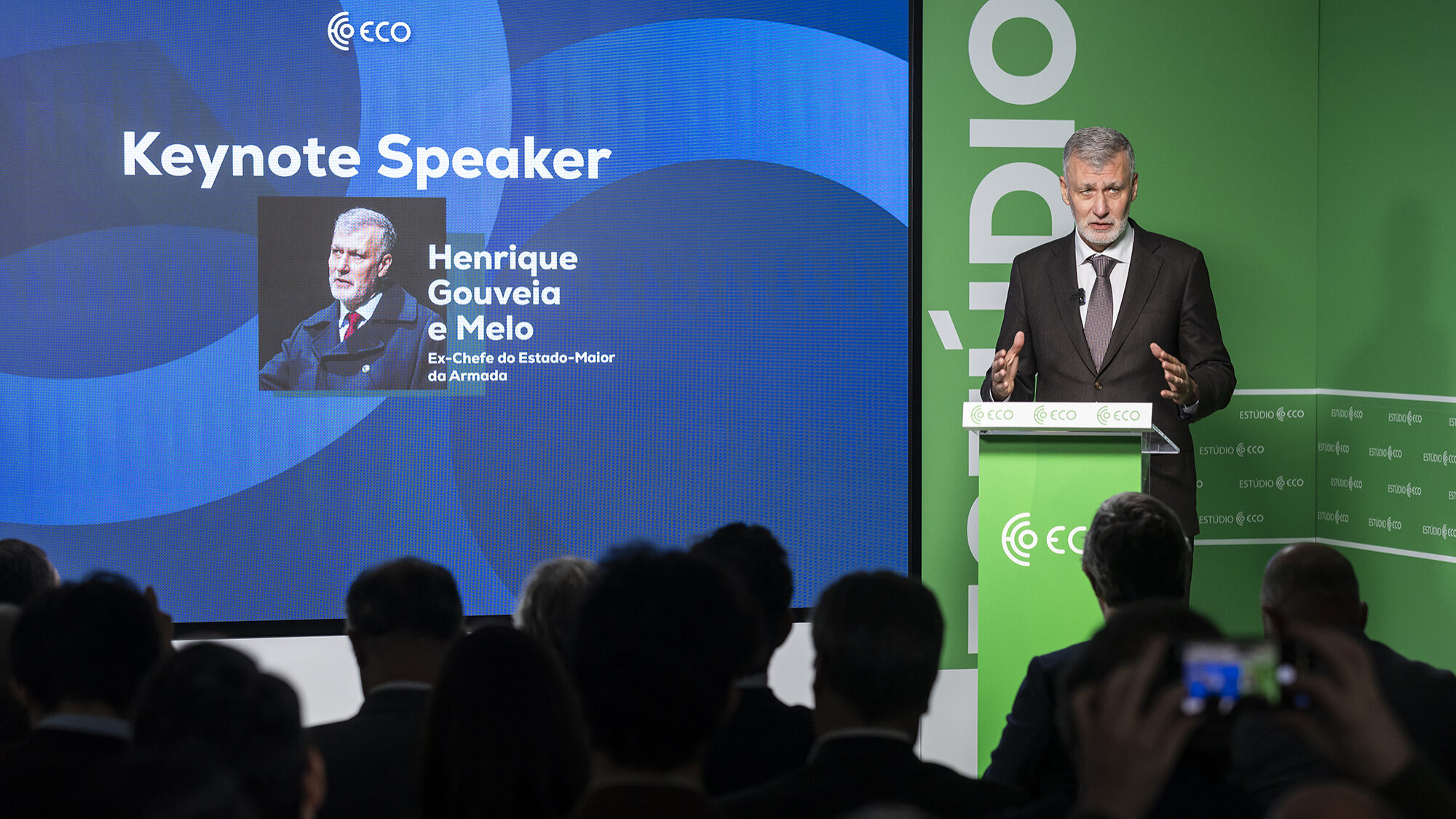
The Minister for Agriculture also revealed at the close of the ECO conference on Sustainable Agriculture that a new financial instrument will be created, under the Banco de Fomento, to support agricultural businesses that have fallen victim to the series of storms. At stake is €20 million that will replicate the model already used to support reindustrialisation, Defence or Artificial Intelligence.
Despite all these announcements, on the ECO dos Fundos podcast, the new president of CCDR Centro, Ribau Esteves, emphasised that, “in agriculture, the resources are defined, the categories are defined, but there is still no comprehensive coverage for all the problems”.
According to MEP André Franqueira Rodrigues, “rather than simply announcing measures, it is essential to ensure that they reach farmers quickly”. The Socialist even suggests, if necessary, setting up “a dedicated task force” to help improve coordination and increase recipients’ ability to access existing support.
“We cannot waste any more time, nor can we ask those who have lost everything to get entangled in further bureaucratic red tape. There is no point in announcing millions only to disburse pennies and, on top of that, blame farmers for not having been able, in these circumstances, to access the available funds”, added the Socialist, in a veiled reference to the statements made by the minister José Manuel Fernandes, when he revealed that farmers had so far only requested one million euros out of the 40 million available.