Portuguese stock market’s main index targets 10,000 points with Fidelidade IPO on the way
The Portuguese stock market is climbing 1,000 points in less than 100 sessions and is already pointing to the 10,000 mark. PSI may consolidate with the IPO of the insurance company Fidelidade.
The PSI, Lisbon’s main stock market index, took less than a hundred sessions to gain 1,000 points and exceed the 9,000 mark. This rapid rise now puts the 10,000-point mark on the horizon, a level it has not reached since the 2008 global financial crisis. How long will it take to get there?
The Portuguese stock market has been on a long rally since the Covid-19 pandemic. It had its best year since 2009 in 2025 and shows no signs of slowing down: it is off to its best annual start in more than a decade, accumulating a 10% gain since the beginning of 2026.
There are several factors driving the national market. First of all, Portugal’s positive economic environment, with above-average growth, historically low unemployment and a stable political situation — aspects that investors and analysts value.
But there are also reasons at the corporate level, which, in an index with only 16 listed companies, is even more important. The PSI trades at a discount to its peers and its shares offer some of the most attractive dividend yields in Europe. Sectors such as retail, banking, energy and industry — which are strongly represented in the index — have benefited from the recent sector rotation observed in global markets.
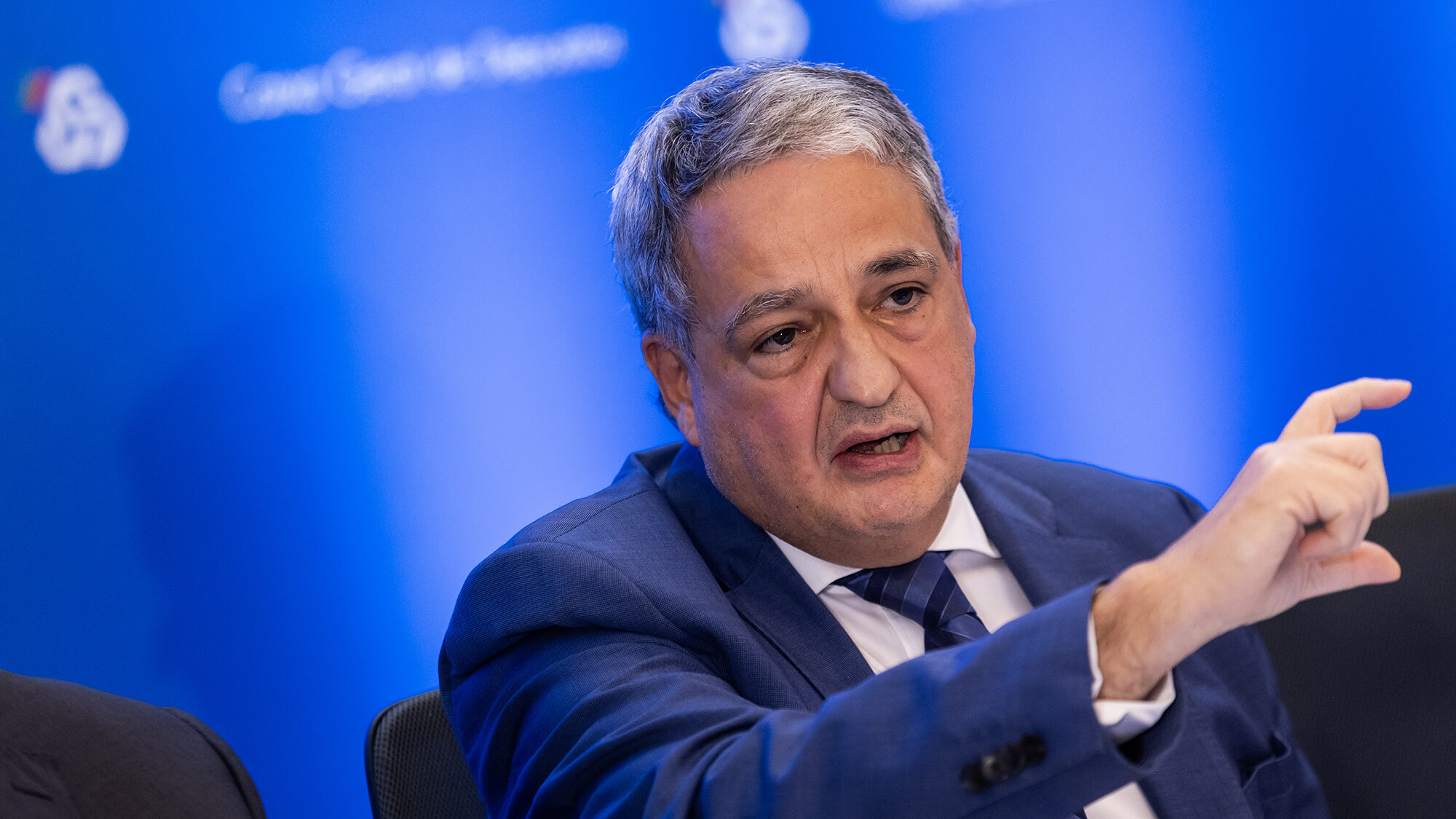
Because of all this, there has been “a strengthening of the positioning of investment funds (national and international) in Portuguese listed companies”, explains Eduardo Silva, director of XTB Portugal, adding that “this financial ‘fuel’ has provided the liquidity necessary to maintain the upward trend, serving as support even in periods of greater external volatility”.
Steven Santos, director of platforms and brokerage at Banco Big, agrees that flows have been decisive and highlights an additional channel for capital inflows: the so-called ‘golden visas’. Since October 2023, ‘golden visas’ have no longer allowed investment through the purchase of real estate, a change that has benefited the capital market.
“Collective investment organisations have experienced very rapid growth due to Americans wanting to settle here. This channel is expected to accelerate throughout the year. If we have 10,000 to 15,000 Americans with 500,000 euros to invest, it ends up being an important boost for a small index like ours”, stresses Steven Santos.
A thousand points in 100 days?
The recent rise reinforces the argument of the most optimistic. The PSI climbed from 8,000 to 9,000 points in 93 sessions between October and February, after having already jumped from 7,000 to 8,000 in 78 sessions between May and August 2025.
For Eduardo Silva, the ten thousand point mark may be months away: “If fund inflows remain constant and the geopolitical situation does not present any unexpected shocks, the ten thousand point mark could be reached in four to six months, approximately 100 to 130 sessions.”
The XTB manager admits that this is an optimistic scenario, but stresses that it is “based on the current market momentum”.
Steven Santos is more cautious, although he does not rule out the target being reached this year. The recent rotation in global markets may, in fact, favour Lisbon. “In recent weeks, we have seen a flight from software, but the PSI does not have this exposure. The rotation has boosted sectors that we have a lot of in Portugal: energy, industry and banking. In other words, the PSI may continue the trend”, he says.
Fidelidade brings diversification and depth to the stock market
The favourable climate for domestic shares could convince Fosun to list Fidelidade on the Lisbon stock exchange. The insurance company is targeting an initial public offering (IPO) in early 2027 with a valuation of over €3 billion. And it can count on a strong investor: Caixa Geral de Depósitos (CGD), as ECO reported last Friday. The public bank is considering increasing its stake in the Portuguese insurer, in which it already holds a 15% stake.
For the market, Fidelidade’s entry would represent more than just a new listing. “It would introduce a large-scale insurance sector, reducing the index’s dependence on energy and retail”, points out Eduardo Silva, adding that the size of the operation could increase the international visibility of the Lisbon stock exchange and attract new investors, such as passive funds (ETFs).
“We haven’t had this sector for decades”, recalls Steven Santos. “It is solid, regulated and has very predictable cash flows, and Fidelidade will possibly have an attractive dividend, reasons for investors to be interested.”
Gone are the days when the financial sector dominated the PSI. Only BCP remains on the stock exchange and now it may have company.
On the other hand, a successful IPO would serve as a “calling card for other Portuguese companies”. “It would prove that the domestic market has the depth to absorb large operations”, says Eduardo Silva.
After failed IPOs by Luz Saúde and Sonae MC and a cascade of delistings, including Greenvolt, Inapa, Reditus and Grão Pará, Fidelidade would be a real safeguard for the stock market.