Tech made in Portugal aboard EU Space Agency Jupiter-bound satellite
The launch, from ESA's space base in Kourou, French Guiana, where Portugal will be represented by the president of space agency Portugal Space, Ricardo Conde, will take place at 13:15 (Lisbon time).
The European Space Agency (ESA) will launch on Thursday a satellite that will study Jupiter and three of its largest moons, using science and technology ‘made in Portugal’ and having a Portuguese as flight operations director.
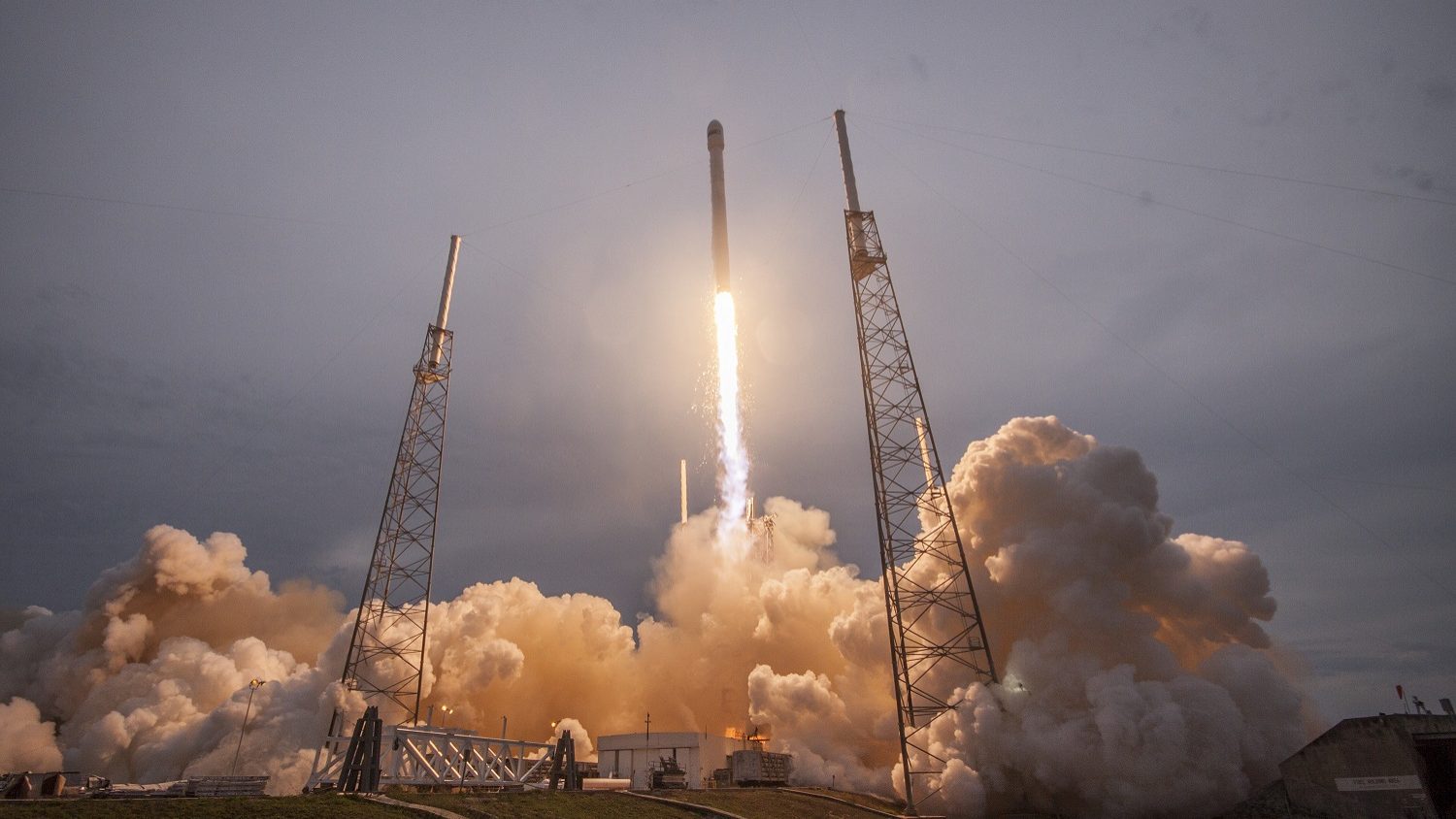
The launch, from ESA’s space base in Kourou, French Guiana, where Portugal will be represented by the president of space agency Portugal Space, Ricardo Conde, will take place at 13:15 (Lisbon time) aboard a European Ariane 5 rocket.
The mission, which was due to be launched in 2022, has Bruno Sousa as director of flight operations and the satellite includes components manufactured by the companies LusoSpace, Active Space Technologies, Deimos Engenharia and FHP – Frezite High Performance and an instrument partly designed by LIP – Laboratory for Instrumentation and Experimental Particle Physics.
JUICE (JUpiter ICy moons Explorer) will study the Solar System’s largest planet and the moons Europa, Ganymede and Callisto, where scientists think liquid water (the fundamental element for life as we know it) may exist under the ice crusts on the surface.
The satellite is due to reach the gas ‘giant’ after eight years, in July 2031, make 35 approach flights to the icy moons and reach Ganymede in December 2034.
It will be the first time that an artificial satellite has orbited a moon of another planet.
The ESA mission, costing around €1.6 billion and with the collaboration of the US (NASA), Japanese (JAXA) and Israeli (ISA) space agencies in terms of instrumentation and hardware, is expected to end in September 2035.
The first scientific data are expected in 2032.
Jupiter is 11 times larger than the Earth and is composed mostly of gas, like the Sun. Ganymede is the largest moon in the Solar System and has a large ocean beneath its surface.
ESA’s mission is designed to find out if there are places around Jupiter and inside its icy moons with the necessary conditions (water, energy, stability and biological elements) to support life.
Deimos Engenharia was tasked with ensuring that the satellite will not affect “under any circumstances” either the planet Mars or the moon Europa, which are, according to the company, in the “maximum planetary protection category for extraterrestrial bodies” that can “potentially harbour life”.
On the other hand, the company’s work “consisted of improving the mission’s basic autonomous navigation strategy during the flight past Europa and during the orbital phase of Ganymede”.
One of the several instruments that the satellite carries is a radiation monitor developed by LIP and Efacec, in cooperation with the Norwegian company Ideas and the Swiss research institute Paul Scherrer.
Researcher Patricia Gonçalves, who coordinated the project at LIP, clarified to Lusa that the instrument “serves to measure the ionizing radiation environment” to which the satellite will be subject during its trajectory, “being able to send warning signals so that other detectors and systems of the satellite can be protected”.
The radiation monitor, being an energetic particle detector, “also allows scientific measurements to be made and to complement the measurements of other instruments” on board the satellite.
LIP was also at the forefront of an ESA project to test the irradiation of the satellite’s electronic components, to ensure that they were prepared to “survive the high doses of radiation expected in Jupiter’s magnetosphere”.
Another of JUICE’s instruments is a magnetometer, a device that will characterise Jupiter’s intense magnetic field and its interaction with that of the moon Ganymede.
LusoSpace developed a coil that, as the CEO of the company, Ivo Yves Vieira, summarized to Lusa, generates a magnetic field “that will be a reference for the instrument to measure Jupiter’s magnetic field”.
In addition to shields that protect sensitive electronic components from high radiation, solar panels to supply energy and an insulating layer against extreme temperatures, the satellite has an antenna to send data to Earth and a computer to solve some problems independently.
The antenna has a coating produced by the Porto-based company FHP and its operating mechanism was developed by Active Space Technologies, based in Coimbra.
The JUICE satellite will be the last mission sent by ESA from French Guiana aboard an Ariane 5 rocket, which will be replaced by the Ariane 6 model.
Currently, the only artificial satellite orbiting Jupiter is Juno, from NASA.
Portugal has been a member state of ESA since 2000.