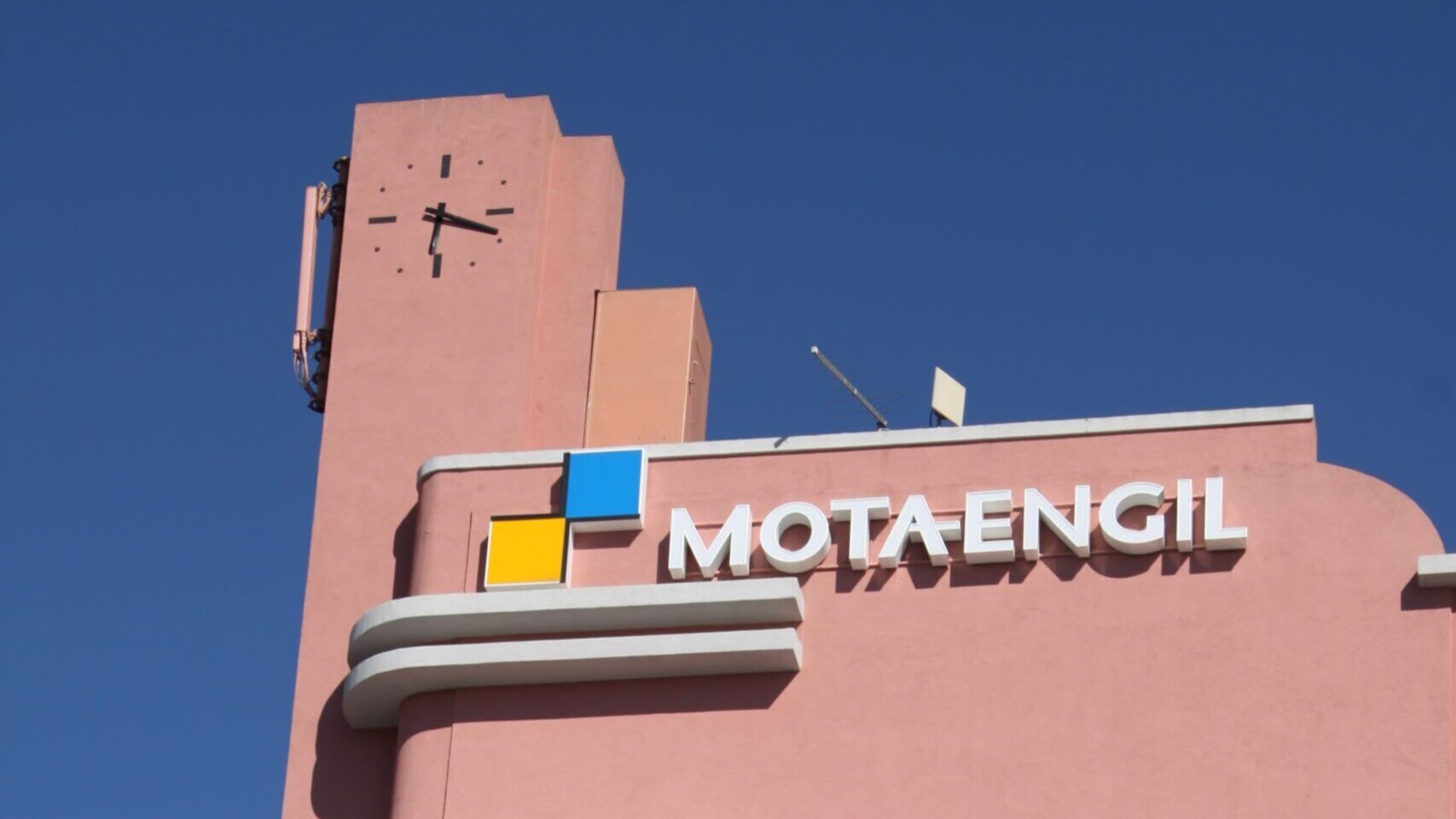
Mota-Engil takes first steps in exploring its own mines
The first exports from the iron mine in Cameroon are expected to go ahead this year. A project in Malawi is in the prospecting phase. In services for the oil industry, Venezuela is back on the radar.
Mota-Engil has been involved in mining for several years, providing services to large companies in the sector, but is now preparing to take its first steps in exploring its own mines. The first tonnes of iron ore are expected to leave Cameroon this year.
The mining area was one of the stars of Wednesday’s presentation of Mota-Engil’s 2026-2030 strategic plan, for which the label of construction company makes less and less sense. This activity, centred in Africa, where it has 11 contracts, generated revenue of €732 million for the company in 2025, with a hefty margin of 30% (EBITDA).
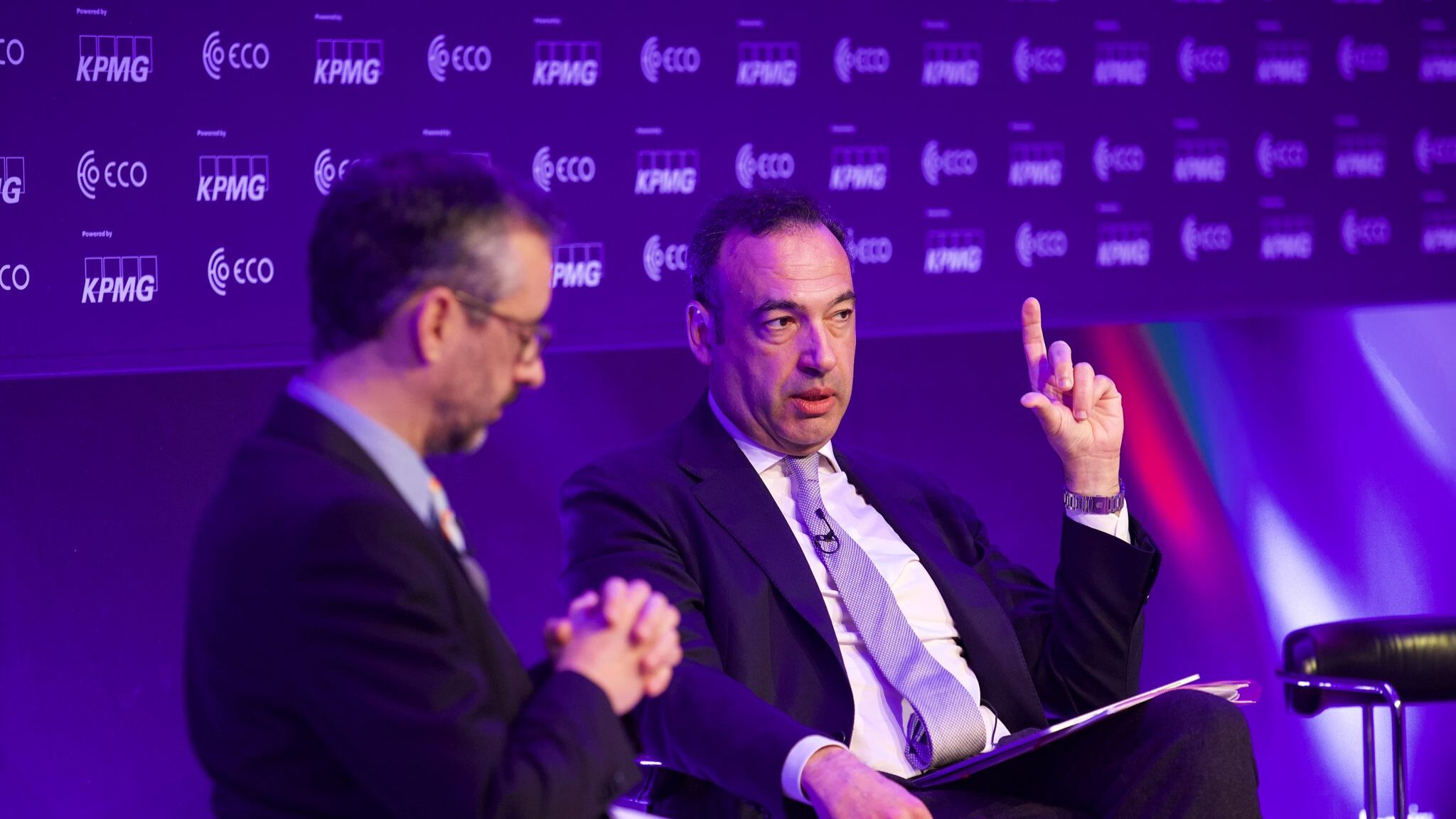
The Portuguese company is mainly focused on the extraction and handling of rock materials for third parties, but is slowly entering into its own exploration. It has seven exploration licences in Africa and the first will start operating this year. “We have a small iron project that will start operating in Cameroon”, revealed the executive director, Manuel Mota.
“We will probably start exporting iron from Cameroon later this year. It is a project with great potential, but with quite complex logistics. We will start by producing 1 to 3 million tonnes per year”, he explained. Inferred and probable reserves are estimated at one billion tonnes.
Chilwa Minerals, a rare earth and heavy sand exploration company in Malawi, where Mota-Engil holds a 34% stake and which is listed on the Australian stock exchange, is also moving forward. “It is in the prospecting phase and is beginning to enter the capital-intensive phase”, said Manuel Mota.
“We also have some investments in Angola, at an earlier stage, in copper manganese, gold and cobalt. But this is very, very greenfield, not least because Angola is a new market in this area”, the executive director added.
“We are making some investments and opportunities are arising, we have to keep up”, said Manuel Mota, adding that this strategy means “moving up the value chain” of mining activity.
Mining activity in Portugal is not part of the equation, despite the country’s high lithium reserves. “I think it’s very difficult to invest when the environmental reality doesn’t allow it”, he replied. “Are you familiar with the situation at the Barroso mine? I think that on any other continent it would already have been built. In Europe, it will probably take another 20 years. I hope not, because it’s an excellent project”, he added.
The first service contract for mining operations dates back to 2018, in Mozambique. There are now 11, almost all of which are past the initial launch phase, which Mota-Engil promises will bring “greater profitability in the coming years”.
Mota-Engil claims first place in the ranking of service providers to mining companies in Africa, but its ambitions also extend to South America. “In the Andean region, with geopolitical changes, there have been many significant investments in mining, both in Peru and Chile, as well as in Argentina, which was a somewhat unexplored area, perhaps also for financial reasons”, explained Manuel Mota.
“Today, it is a market that has become very attractive for players such as Rio Tinto, Glencore, the Lundin Group, and others that have significant investments, so we have to keep up with these investments if we want to provide services in this area”, he added.
Mota-Engil is also targeting the acquisition of Brazil’s Bahia Mineração (Bamin), which has the concession for a project that includes an iron mine, a railway line and a port in the Brazilian state of Bahia. “We are looking at the project”, said the manager, explaining that it is a business with synergies for the group, as it has a mining, infrastructure and port component. Construction alone is worth “four or five billion”.
The mining sector took centre stage at Capital Markets Day, with one analyst asking whether Mota-Engil would allow investors to help finance its investments – a possibility that Manuel Mota did not rule out.
“Going public is a possibility. It is something we are considering. We have had approaches in this regard”, admitted the company’s director during Capital Markets Day, where the strategic plan for 2026-2030 was presented.
Later, on the sidelines of the event, the manager stressed that “there is no commitment in this regard” and that “it is not in the strategic plan”. “I was asked if we were considering going public, it depends on the proposals we receive”, he added.
Venezuela back on the radar
Mining is part of Mota-Engil’s ‘natural resources’ area, which also includes oil exploration services, where the company sees high growth potential. It already operates in Brazil, Angola and Nigeria, with maintenance or even infrastructure construction contracts, including a €700 million project for Petrobras in Rio de Janeiro.
But it is looking at other countries, such as Guyana, Suriname and even Venezuela, now that the United States has taken control of oil exploration.
“With the changes that are taking place, there is a possibility that Venezuela will once again become a market. It has stopped hiring, it has stopped producing. It is an economy that has fallen significantly in terms of oil production. By opening up the market, I think it makes sense to look at it”, said Manuel Mota.
The strategic plan, called ‘Focus 2030’, aims to increase turnover from 5.3 billion to 9 billion euros, achieve a net profit of 360 million euros (4% net margin) and maintain an EBITDA margin above 18%.
CEO Carlos Mota Santos stated that engineering and construction will continue to be the main “growth engine”. “In addition to being an absolutely critical activity, it also continues to be the driving force for other businesses”.
For the other three areas – concessions, circularity and natural resources – the manager anticipates a balance. In terms of regions, Europe, Africa and Latin America are expected to make similar contributions, but Carlos Mota Santos, regarding the latter, highlights “a very strong hub, which is Mexico, and another very strong hub [to] stand out in the coming years, which is Brazil”.
Mota-Engil’s shares rose 4.6% on Wednesday, reacting to the presentation of the investment plan, and have quadrupled in value since the beginning of 2023. The company is valued at €1.74 billion. Manuel Mota considers that it remains “quite undervalued”.