António Mota (1954–2025). The engineer who became an entrepreneur
The ‘boss of Mota’, as he was known, died last Sunday. He was the leader and president of Portugal's largest construction group between 1995 and 2023.
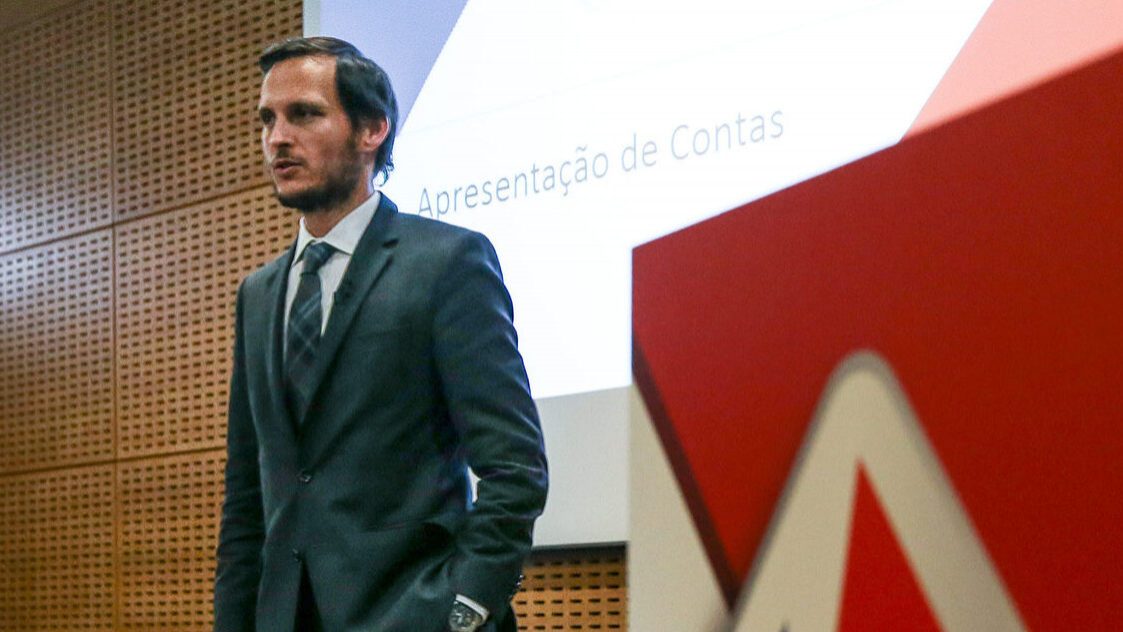
António Mota, former president of Mota-Engil, died on Sunday. The engineer who had the “advantage of being the boss’s son”, but who also forced him to “prove himself twice as much”, dedicated his entire life to expanding the family’s construction company. More than money, he said he leaves “a lot of work to do”; to his children and nephews, a legacy of “as much work” as the founder had left him and his three sisters.
The businessman, who was president of Portugal’s largest construction company between 1995 and 2023, had stepped down as vice-chairman of the board of directors in April this year, leaving his position in the management of the construction company created by his father, Manuel António da Mota, which is now led by the third generation, with his nephew Carlos Mota dos Santos as CEO since 2023.
Just over two months ago, António Mota decided to transfer 28% of the capital of Mota Gestão e Participações, SGPS (MGP), the owner of the construction company founded by the Mota family, to his four children. In September, he also handed over his seat on the board of the family business to his son Manuel Mota, who had already taken his father’s place on the construction company’s board.
António Manuel Queirós Vasconcelos da Mota was born in 1954 in Amarante, where he lived until he was 15 years old. The son of Manuel António da Mota and Maria Amália Guedes Queiroz de Vasconcelos, until the age of 10 he dreamed of becoming a policeman. Then, an engineer. But António Mota’s destiny had been mapped out since birth: to continue the company created by his father, his great role model.
Like his sisters, he attended a school run by nuns, Colégio de S. Gonçalo. With a degree in Civil Engineering from the Faculty of Engineering of the University of Porto (FEUP), António Mota began his career in 1976 as an intern at Mota & Companhia. He held various operational management positions at the company before succeeding his father as its leader: in 1981, he took over as general manager of Mota & Companhia; then, between 1987 and 1995, he became executive vice-president; finally, in 1995, he replaced his father as president of the company founded in 1946.
With the merger of the Mota and Engil groups in 2000, he took over as executive chairman of Mota-Engil SGPS. The union of these two companies was decisive in accelerating the growth of the construction company we know today, giving a boost to the business. “The most important thing for Mota-Engil was the merger of Mota & Companhia and Engil. I still call it a merger. The first step was to attempt a friendly merger. It usually takes two stubborn people to be stubborn. I think in this case there was only one stubborn person, and that was the other side. Then there was no amicable merger and it had to be a little forced”, recalled António Mota when he received the ECO Lifetime Achievement Award in December 2024.
In 2008, António Mota decided to make an important change in Portugal’s largest construction company, creating the position of CEO, distinguishing between the executive and non-executive presidencies. At only 53 years of age, he called on Jorge Coelho, then former Minister of Public Works, to succeed him in the executive leadership, believing that it was necessary to restructure, correct mistakes and create the conditions for a new phase for the group.
Indifferent to the controversy surrounding the choice of a former politician with influence in the sector, the businessman always defended his choice, considering that handing over the leadership to someone outside the family, at a time when the company had already grown significantly – both inside and outside the country – but wanted to continue to cross borders, was fundamental to building an even more robust portfolio.
“Dr Jorge Coelho played a key role in all of this. He formalised the commitment to training. He took charge of the international side and reorganised it. He started with three strategic hubs: Poland and Central Europe, Africa (Angola and other countries) and Latin America. He created the conditions for decentralised management – that’s where it’s being done, not here. He created this philosophy: we have to start from these hubs for international growth, not from Portugal. Portugal is too small for internationalisation to start from here”, he told journalist Anabela Mota Ribeiro.
In the same interview, the “boss of Mota”, who always shared the board of directors and the company’s capital with his three sisters (Maria Manuela, Maria Teresa and Maria Paula), said that he “wanted to put in place a second level” – so that the decisions and development of the third generation would be “more distant” from him – before the family chose his successor from the third generation, which happened in 2023 with the appointment of his nephew Carlos Mota dos Santos.
Staying away from management was not easy, according to him. “Two years ago, I handed over executive management to my son and my nephew, trying not to get involved. Which isn’t easy… It’s difficult not to get involved after so many years, but I try to do that”, he said at the ECO Lifetime Achievement Award ceremony.
Going public and a new Chinese shareholder
Although he has always advocated that Mota-Engil is a family business, António Mota was not afraid to float the company on the stock exchange or to welcome a new Chinese shareholder, China Communications Construction Company (CCCC), which holds a 32.4% stake. “One thing is very clear: Mota-Engil will continue to be what it has always been, a family-owned, Portuguese, European company based in Lisbon. Deeply rooted in Portuguese culture, which is a fundamental aspect. Portugal has 500 years of history in Africa and Latin America”, he said in an interview with Expresso newspaper after the agreement was announced in December 2020.
Development, growth and ambition. These were the words that made up his speech and guided him at the helm of the company, always drawing on the example set by his father: “A family business is defined by having role models. Here there is a very strong one, that of the founder. There is the reference of a shareholder who is always present, in good times and bad, alongside the managers”. “And there is a culture that, in addition to being business-oriented and results-driven, is a humanistic culture”, which he reinforced with the creation of the Manuel António da Mota Foundation, which focuses on social development, education and culture.
Even though he stepped away from management – by his own decision – the businessman, together with his sisters, remained present, preserving the family culture of the business. Unlike other family groups, where disagreements force one of the siblings to take control of the company, António Mota and his sisters always maintained a close relationship and their 10 children (and future successors to the group) were raised together — they are “almost siblings”. A united ‘clan’ that wants to preserve the family heritage.
“My father used to say that he wasn’t leaving us much money: he was leaving us a lot of work. A lot of work to do. What my sisters and I think is to leave our children (between us we have ten) as much work as our father left us. Let there be financial freedom for people to have a comfortable life, but in order to continue to have that comfortable life, they have to work. Let it not be easy money”, said Anabela Mota Ribeiro in the same interview.
As for Portugal, António Mota, who assumed he had “some influence” in the country, asked for the same thing he advocated for his company: ambition. In a video published by Business Roundtable Portugal, of which Mota-Engil is also a member, António Mota left a very clear message: “We all started small, we grew. We never lacked ambition, and that is what this country lacks: ambition for all Portuguese people, for all companies and for all entrepreneurs. We believe we can contribute to creating an ambitious spirit for Portugal.”
In June this year, the President of the Republic, Marcelo Rebelo de Sousa, awarded the entrepreneur and manager the insignia of the Grand Cross of the Order of Infante D. Henrique, which aims to distinguish “relevant services rendered to Portugal, at home and abroad, as well as services in the expansion of Portuguese culture or for knowledge of Portugal, its history and its values”. This Sunday, in an official statement on his passing, Marcelo Rebelo de Sousa evoked the businessman’s qualities: “He combined leadership with empathy, humanity with dynamism, simplicity with efficiency. Without him, the last decades of our economy would have been different. Finally, he knew how to prepare his succession in time. Thus, the younger generations know how to live up to the vision of their ancestor.”
The civil engineer turned entrepreneur was a champion of Portuguese engineering. “Portuguese engineering is on a par with any other engineering anywhere in the world. With one advantage: we have an ability to adapt to local cultures that no one else has”, he praised at the ceremony where he received the Lifetime Achievement Award promoted by ECO. António Mota was, in fact, the first shareholder of Swipe News, owner of ECO, accepting the challenge of contributing to the birth of an independent media outlet, a principle he always protected.
The funeral ceremonies took place on Monday, 1 December, in Amarante.