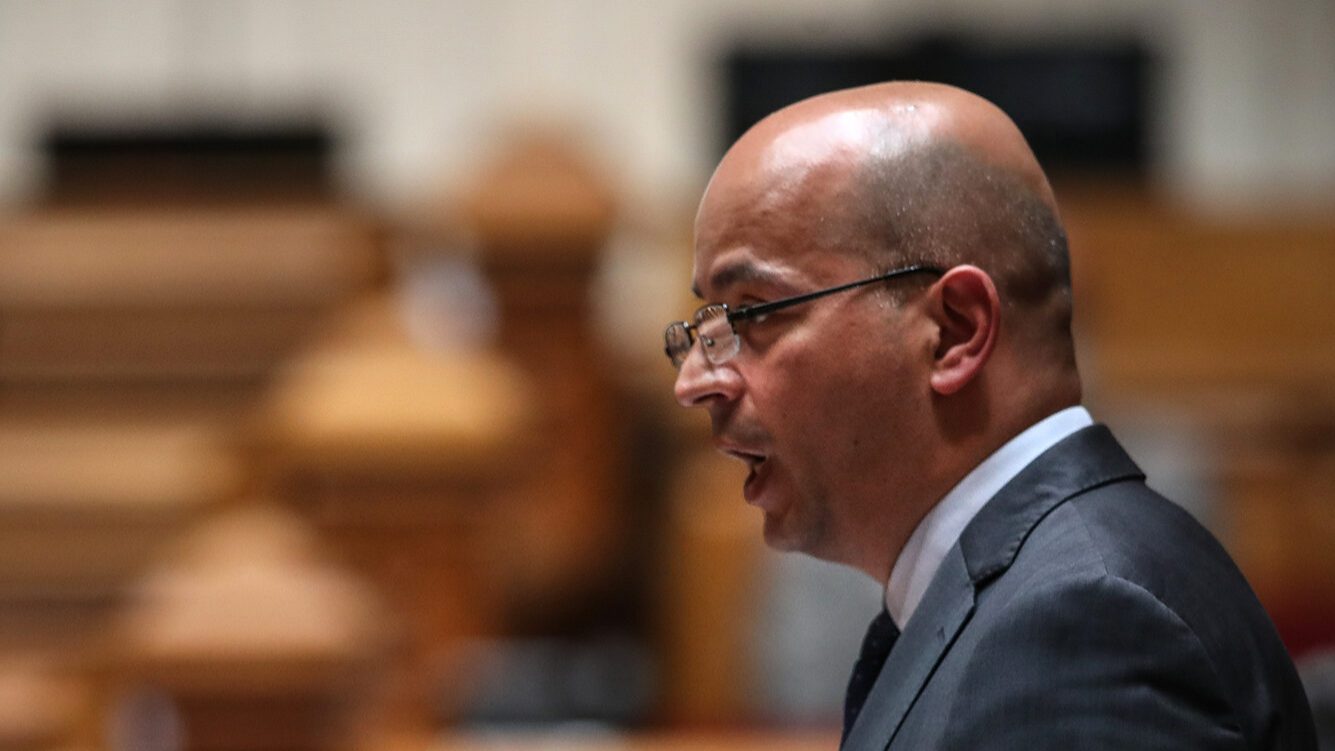
‘Nobody is concerned about budget deficit’
Economist João Borges de Assunção said that "nobody is very worried" about the deficit, warning that budgeting "cannot be as relaxed as the government would like or as European rules allow".
Economist João Borges de Assunção told Lusa that “nobody is very worried” about the deficit, warning that budgeting “cannot be as relaxed as the government would like or as European rules allow”.
“I think that at this moment, genuinely, nobody is very concerned, and I certainly am not either, with the issue of the deficit itself, whether in 2020, 2021 and 2022,” said the professor of the Catholic University of Lisbon.
He also considered that “the preparation of the 2022 budget cannot be as relaxed as the government would like or as European rules allow, because then it is necessary to present a medium-term strategy to reduce the deficit and debt.”
“If we end 2022 in a very bad situation, then it is impossible to draw up a budget in 2023,” warned João Borges de Assunção.
Considering 2022 to be “a year of transition”, the professor said that “by 2023 the Portuguese government will start to be asked about its strategy to reduce the deficit, seen essentially in terms of primary balance, and in terms of the level of debt”.
For that reason, the economist revealed concern about permanent increases in spending, “for example the recruitment of civil servants, greater capacity in the National Health System, unjustified increases in civil service salaries.
On the other hand, “extraordinary, temporary increases in spending, with support for employment, support to maintain companies, with eventually even temporary tax reductions, in some cases even direct subsidies, that is completely reasonable and seems very normal to me”.
When questioned about a possible change to European Union budget rules, which require a public deficit of less than 3% and public debt below 60% of Gross Domestic Product (GDP), Borges de Assunção rejected that these rules were the problem.
“I don’t think it’s a problem of rules. The rules that exist in the European Union are rules that make sense from the perspective of the sustainability of public finances and equity between countries,” he said, considering them to be “rules of good governance”, of “sustainability and financial viability of the Portuguese economy and the Portuguese state”.
“I don’t see that there is a rational argument for changing the rules because of the difficulties of 2022 or 2023. I don’t think there is a great advantage in Portugal aiming for more flexible rules, because that is not the issue,” he concluded.
On 23 September, Statistics Portugal announced that the budget deficit was 5.3% of GDP in the second quarter of the year, and in the first half of the year, the budget deficit was 5.5% of GDP.
The government is forecasting a deficit of 4.5% of GDP for the year as a whole but will release an update of its forecast on 11 October, when the draft State Budget law for 2022 is presented.