Expansion of floating wind power depends on state regulation – WindFloat Atlantic
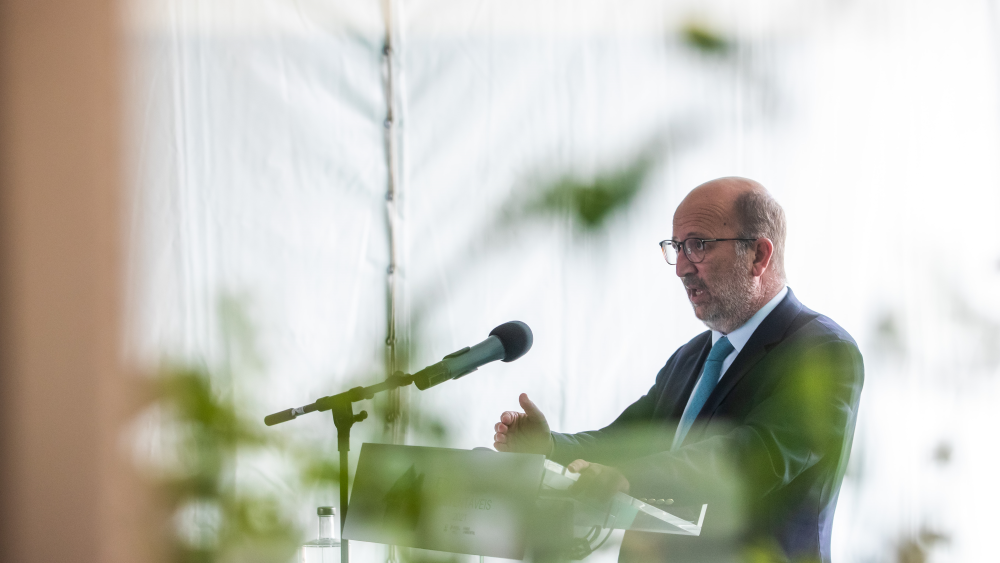
Jose Pinheiro, project director of WindFloat Atlantic, said the growth of floating wind power depends on the government deciding to include the technology in upcoming renewable energy auctions.
The project director of WindFloat Atlantic, located off Viana do Castelo, said Tuesday that the growth of floating wind power depends on the government deciding to include the technology in upcoming renewable energy auctions.
According to Jose Pinheiro, who was speaking to Lusa at the end of a boat trip to the first floating wind farm in Europe, installed 20 kilometres offshore Viana do Castelo, to mark one year of activity of the offshore wind farm, in Portugal, “no renewable energy auction is scheduled”.
Spain, he said, has recently completed an identical procedure that gives “a good sign that regulation is on the verge of being a reality”.
“It has been proven that the technology works, with the largest wind turbines commercially available on the market and, therefore, having reached technological maturity (Technology Readiness Level (TRL)), it makes sense to talk about the ambition to continue developing projects, but now commercially, in the country and abroad,” he added.
“There are several international players interested, but they need a defined regulatory environment”.
Pinheiro explained that expansion of the floating wind farm installed off Viana do Castelo is planned, which is dependent on auctions for wind energy.
“Internally we are developing expansion projects, but the regulatory environment is lacking so that technologies can compete and the megawatts needed to develop larger projects can be awarded. The area that is delimited in the Maritime Spatial Plan (PSOM) for Viana do Castelo can accumulate between 15 and 20 wind turbines, but only when there is regulation, possibly an auction for floating technology,” he specified.
According to the official, only “industrialisation, which comes when the market asks for it, will allow the technology to become cheaper, so that the costs follow the normal trend of technology standardisation”.
The Windfloat technology park is made up of three floating platforms that support turbines with an installed capacity of 25 megawatts (MW), connected to an 18-kilometre cable installed 100 metres deep on the seabed, with the capacity to receive 200 MW of renewable energy, and which currently produces 25 MW.
Between July 2020 and the same month this year, Windfloat Atlantic produced, in 3,800 hours, 75 Gigawatt-hours (GWh), enough to supply 60,000 people.
According to data revealed by José Pinheiro, “the fixed remuneration of the energy produced presents a dynamic value, but it estimated an average of 140 euros per MWh.”
June 2021 was the month in which the floating park produced the most energy, a total of 8.6 GWh, and in August it broke a record with four consecutive days with a 48% load factor.”
The Ocean Winds consortium project was coordinated by EDP, through EDP Renováveis, and includes technology partner Principle Power and Repsol.
“Ocean Winds, of which EDP Renováveis is a shareholder, has the ambition of developing floating wind technology, to continue with large-scale commercial projects,” said José Pinheiro.
“The path has to be done on the basis of auctions, where, in fact, the market competes,” he highlighted.
He said that the consortium is “developing projects in California, the United States, in South Korea, for three floating parks, in France, in the Gulf of Lyon, this one scheduled to start operating by the end of 2022.
“It is a very similar project to the one in Viana do Castelo, it is almost the twin brother, with three 10 MW units,” he said.
WindFloat Atlantic is supported by public and private entities and is funded by the European Commission, the Portuguese Government and the European Investment Bank (EIB).
“What this project aims to show is that countries can have ‘offshore’. This project has shown that it is possible to explore resources in places, which until now, were inaccessible”.
For José Pinheiro, WindFloat technology has more advantages than conventional technology because it is “less intrusive”, as it uses “an anchoring system”.
Another advantage, in relation to onshore wind farms, is that “they can be installed in large electro-production centres outside communities, with much higher energy capacity than conventional ‘offshore'”.
“Floating technology is less intrusive on the seabed because it does not involve physical penetration of large structures,” he mentioned.
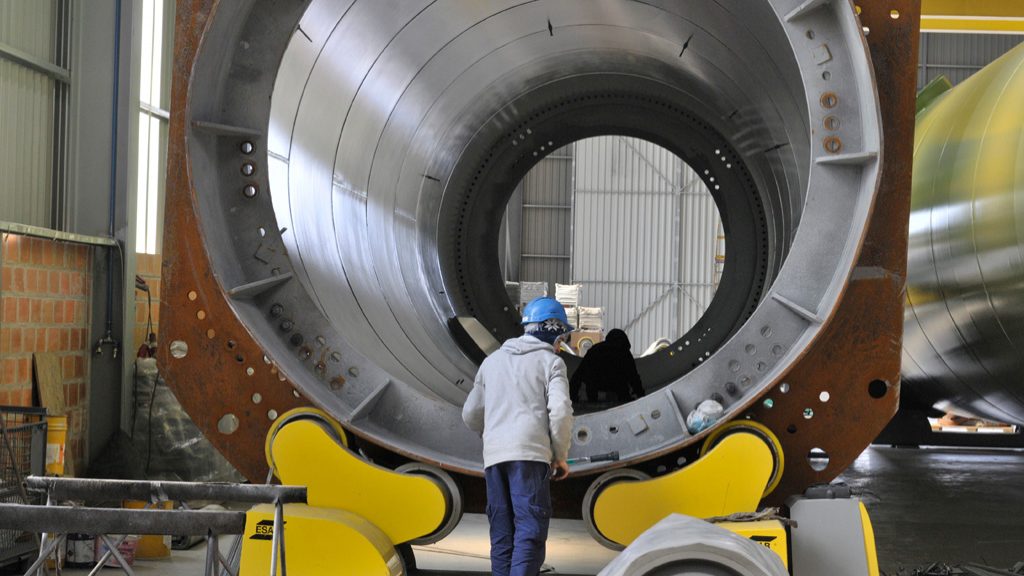
The “Portuguese project” is made up of “two platforms produced at Lisnave, in Setúbal,” and a third wind turbine was produced in Ferrol, Galicia.
Maintenance “is done once a year and is similar to that carried out in wind farms on land”, and in the last year of operation 513 hours of work were carried out offshore.
“From an engineering point of view, the project was developed to have a useful life of 25 years, but just like onshore wind farms, when it reaches 20 years the state of wear and tear of the equipment will be assessed,” noted José Pinheiro.